Reaching for the Stars
Sunday, March 15, 2026 at 3:00 PM, Clemens Center, Elmira
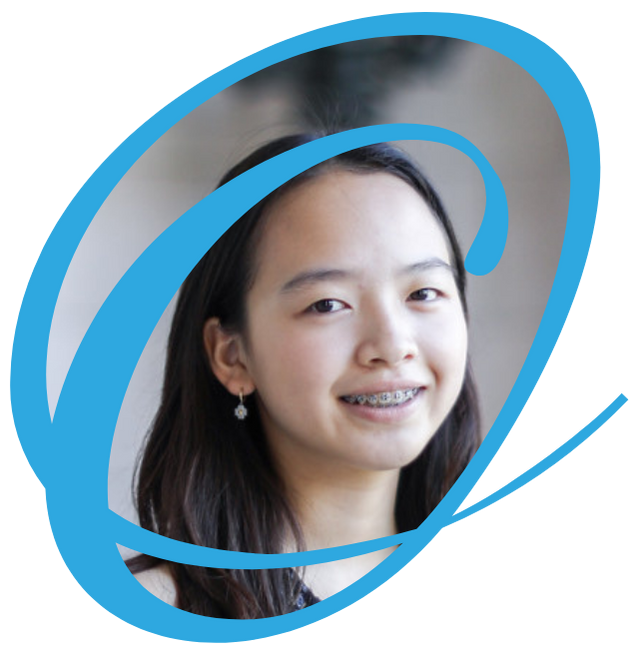
Experience the future of music that is out of this world in this inspiring side-by-side concert, where the talented young musicians of the Youth Orchestra perform alongside the professionals of the Orchestra of the Southern Finger Lakes.
From the sweeping beauty of Copland’s Appalachian Spring to Wang Jie’s The Winter That United Us, this program blends tradition and imagination. Be among the first to hear a world premiere by composer Robert Dusek, and cheer on our Young Artist Competition winner, Ashley Park taking the spotlight with a dazzling concerto performance.
In honor of Music In Our Schools Month,* this concert is a powerful reminder of the importance of arts education and the joy of making music—together. Don’t miss this collaboration with the Next Gen in harmony.
Fun for the whole family, kids under 18 are free with an adult ticket purchase.
*Music In Our Schools Month® is a registered trademark of NAfME, the National Association for Music Education.
2025-2026 ORCHESTRA SERIES
Sunday, March 15
3:00 PM
Clemens Center
207 Clemens Center Pkwy, Elmira, NY 14901
Adults: $29-$59*
Students: $15* (ID required)
Under 18: FREE (with adult ticket purchase)
*Additional fees apply.
Program subject to change.
Meet the Composers
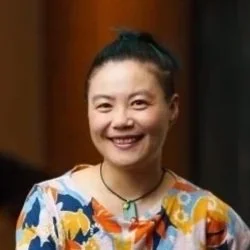
Wang Jie, composer
Wang Jie's stylistic versatility is a rare trait among today's composers. One day she spins a few notes into a large symphony, the next she conjures a malevolent singing rat onto the opera stage. Unveiling beauty in this world, and paving paths for lasting public engagement with classical music are at the heart of her artistry. Her career is made possible by trailblazing folks at The League of American Orchestras, Opera America, the Toulmin Foundation, to name a few. She is a frequent collaborator with organizations that vitalize the beauty of classical music as relevant today as ever, such as the Buffalo Philharmonic Orchestra, the Colorado Music Festival, etc. She studied at the Manhattan School of Music, the Curtis Institute of Music and holds a PhD from NYU. She is co-founder of the Emerging Composers Intensive in CA. Born in Shanghai, Jie now considers herself a New Yorker.
-
I have visited concert halls around the world. My music has sounded in venues around the country. Kleinhans is unlike any other. As far as Buffalonians are concerned, that’s just a fact of life. For me, there is more, that mysterious feeling as I live and work in NYC, but being constantly transported into the space that is Kleinhans, the air that makes the hall glow in warm orange, and the sound bed that is a thousand Buffalonians breathing in unison before JoAnn’s downbeat.
These are not matters of imagination or fantasy. I can’t manufacture the fact Sibelius’ Finlandia was one of my childhood favorites. I got to relive the elation of hearing it played live in Kleinhans just about ten years ago, when I first set foot in this miraculous music hall. My creative energy for “The Winter that United Us” has always been about memory. Those memories that were made in Kleinhans, vibrating in my body, the body that is the instrument of the composer. The memories that can only be made in Kleinhans, alive with JoAnn and the amazing musicians of the BPO. That first moment, like a first kiss, sealed the form this new symphony must take. I wrote it for the BPO, to celebrate Kleinhans and the people who gather tonight to witness it taking its first breath.
There are two aspects of the form that might be helpful as you experience this abstract work for the first time. One, Kleinhans’ interior orange glow guided me towards the final chord of “The Winter that United Us,” the E-flat Major. So many glorious pieces in orchestral history feature this key: Beethoven’s “Emperor” Concerto; Tchaikovsky’s 1812 Overture, and of course, Sibelius’ 5th Symphony, to name a few. You might also be interested to know that I have synesthesia. And I associate orange to be the “joyful” color. So it works both ways: when I hear the note E-flat, my brain mixes it up with the color orange! On my personal calendar, joyful activities such as rock climbing, and baking banana bread, are marked in the color orange. But that’s not all the connections I’ve discovered through this creative journey.
Bear with my inner engineer for a moment: according to composer Arthur Honegger’s cryptogram system, the word “Kleinhans” translates to the notes “F, F, E, C#, A#, B, A♮, Bb, F#;” and the word “Sibelius” becomes “F#, C#, A#, E, F#, C#, A#, F#.” I had myself a field day in F#s! Not only is F# the key of Mahler’s final and unfinished symphonic labor, it is the note that will not stop reaching for the note G. It’s just the next note ahead but somehow, not quite reachable. When it finally does lock into G, the F# unleashes the orange glow of E-flat major. If I can be successful in one thing with this piece, I hope that the audience experience the orange E-flat as the golden rays that signal the arrival of spring, and long ago, ignited life on earth.
One does not need to understand this embedded feature to experience my symphony. But I was giddy with joy when I made the discovery. I might have infected the piece with some of that joy. You’ll have to find me during intermission and let me know.Now that I’ve assured you of the orange colored destination, I hope you might pick up a few “familiar faces” along the way. With the pandemic almost behind us, the winter in our hearts might be enough to unite the living. For me, it was a wake up call. I have been paying homage to my musical heroes since the beginning of my memory, and how those composers ignited my life force. It is only in music that I get to unite with them. Please allow me to save their names for a post-concert conversation.
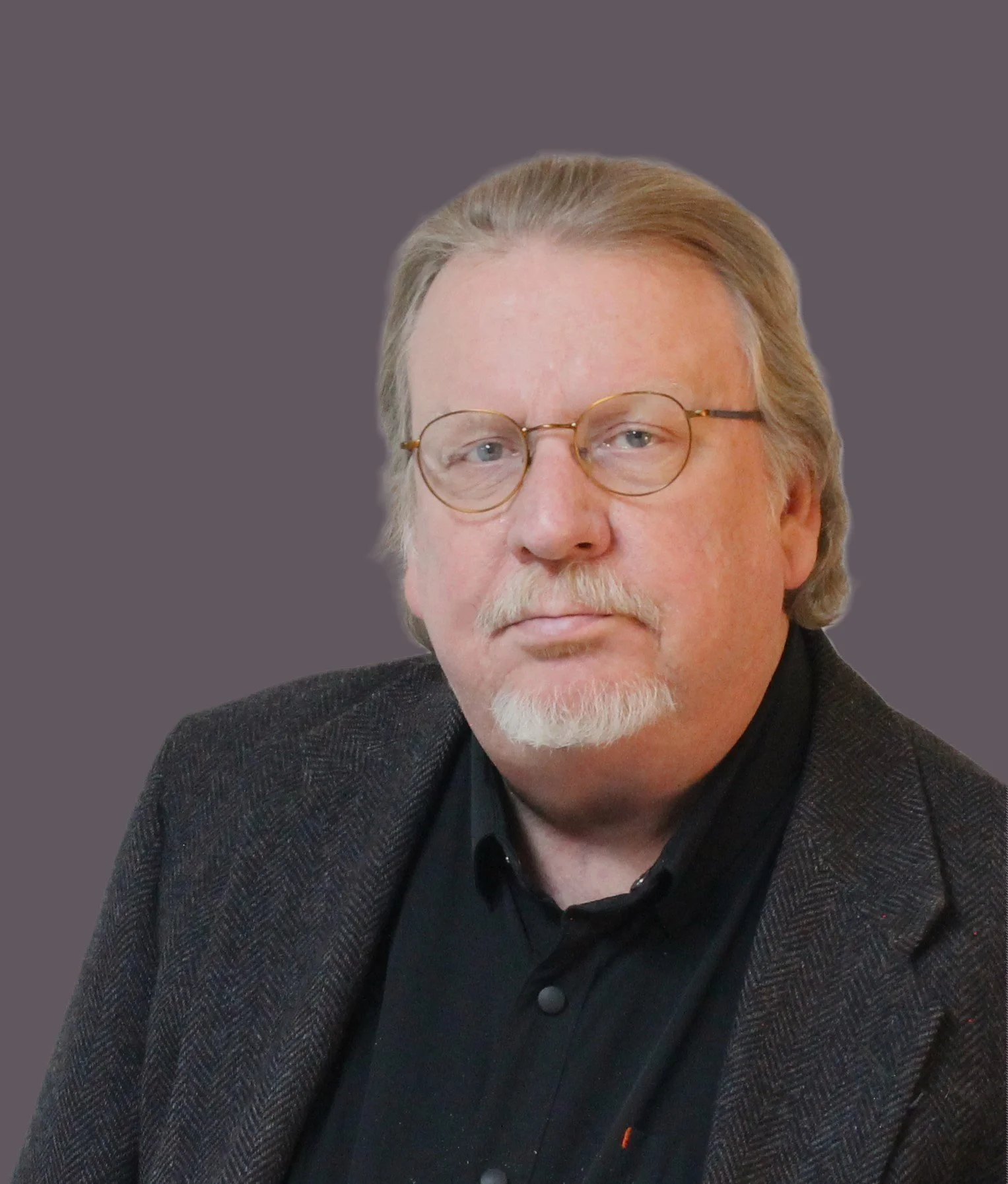
Robert Dusek, composer
Composer Dr. Robert Dusek holds academic degrees from the Eastman School of Music, Southern Methodist University, and the University of Colorado-Boulder. His mentors include Samuel Adler, Christopher Rouse, Joseph Schwantner, Sydney Hodkinson, and for piano David Burge and Alfred Mouledous. He is the recipient of Princeton University’s Bearns Prize as well as several A.S.C.A.P. grants and awards. His music has been performed and recorded across the globe, being described as “energetic... colorful... transcendent.” His 2013 recording, Runes, reached over 500K streams in less than two months, and his performances of Ives’ Concord Sonata have been praised for their originality and virtuosity.
Dr. Dusek has presented and lectured across the nation and has served on the faculty of The University of Colorado where he taught orchestration and instrumentation.
An avid Yellowstone aficionado, Dusek can often be found traversing the geyser basins, exploring the backcountry, even serenading the guests of the Old Faithful Inn upon the mezzanine piano. He currently lives in the Finger Lakes area of New York.
-
My third symphony was written in the Autumn of 2025 and is part of a project to celebrate the 250th anniversary of the United States. It began as a “conversation” between maestro Toshi and myself, and was written specifically for the OSFL and Toshi, highlighting the many strengths of this orchestra - much of the music was written with the individual players in mind!
For me, a work that celebrates this nation’s anniversary is not so much about a specific musical style or historical event, it is about a philosophy - a common experience - and that “American experience” must have something to do with the independent and self determined. Its music is that which is aspirational, not derivative; declarative more so than reflective. There is both ruggedness and expansiveness. This Symphony is a written celebration of that philosophical underpinning.
It is cast in a traditional four-movement structure with each of the movements representing different experiences. The second movement, which we will hear premiered today, is the insistent drive of terror and victory, or maybe a storm with a few reprieves.
There is no program—there is declaration. There is a kind of triumph to its darker strains. It is my hope that you enjoy this offering!
Concert Repertoire
Welcome
The Winter That United Us by Wang Jie (14 mins)
Violin Concerto No. 5, Op. 37 by Henri Vieuxtemps (10 mins)
I. Allegro non troppo - Moderato
Performed by Ashley Park, violin (Doreen B. Hertzog Concerto and Aria Competition Winner 2025)
Symphony No. 9, Op. 95 by Antonín Dvořák (9 mins)
I. Adagio—Allegro molto
Performed by Youth Orchestra of the Southern Finger Lakes
Norwegian Dances, Op. 35 by Edvard Grieg (10 mins)
II. Allegretto tranquillo e grazioso
III. Allegro moderato alla marcia
Performed by Youth Orchestra side-by-side with the OSFL
Intermission
Symphony No. 3 by Robert Dusek (7 mins)
II. Con Moto
A world premiere!
Appalachian Spring Suite by Aaron Copland (25 mins)
Know Before You Go
Clemens Center
207 Clemens Center Pkwy, Elmira, NY 14901
For specific information on parking and how to get there, visit the Clemens Center website.
You'll receive an email before the performance with everything you need to know, and any special announcements about the show. Here are some of the most frequently asked questions:
-
No, tickets are not refundable. However, they are transferrable! Pass your tickets along to a friend if you can't make it to the show.
-
Yes, tickets are transferrable. Pass your tickets along to a friend if you can't make it to the show.
-
Definitely not! While some of our patrons enjoy dressing up for a night out at the orchestra, it's certainly not a requirement and there is no dress code for any of our performances.
-
Run time for the concert is approximately 110 minutes and includes a 15 minute intermission.
Become a season ticket holder today and ensure you never miss a show. Subscriptions are available for the Orchestra Series, the Chamber Music Series, or get the best of everything at the lowest price by subscribing to both.
Prorated subscriptions are available! Contact the OSFL office for pricing information. You can reach us at info@OSFL.org or (607) 936-2873.
Season Ticket Subscriptions are on sale NOW!
Special Thanks to Our Sponsors